
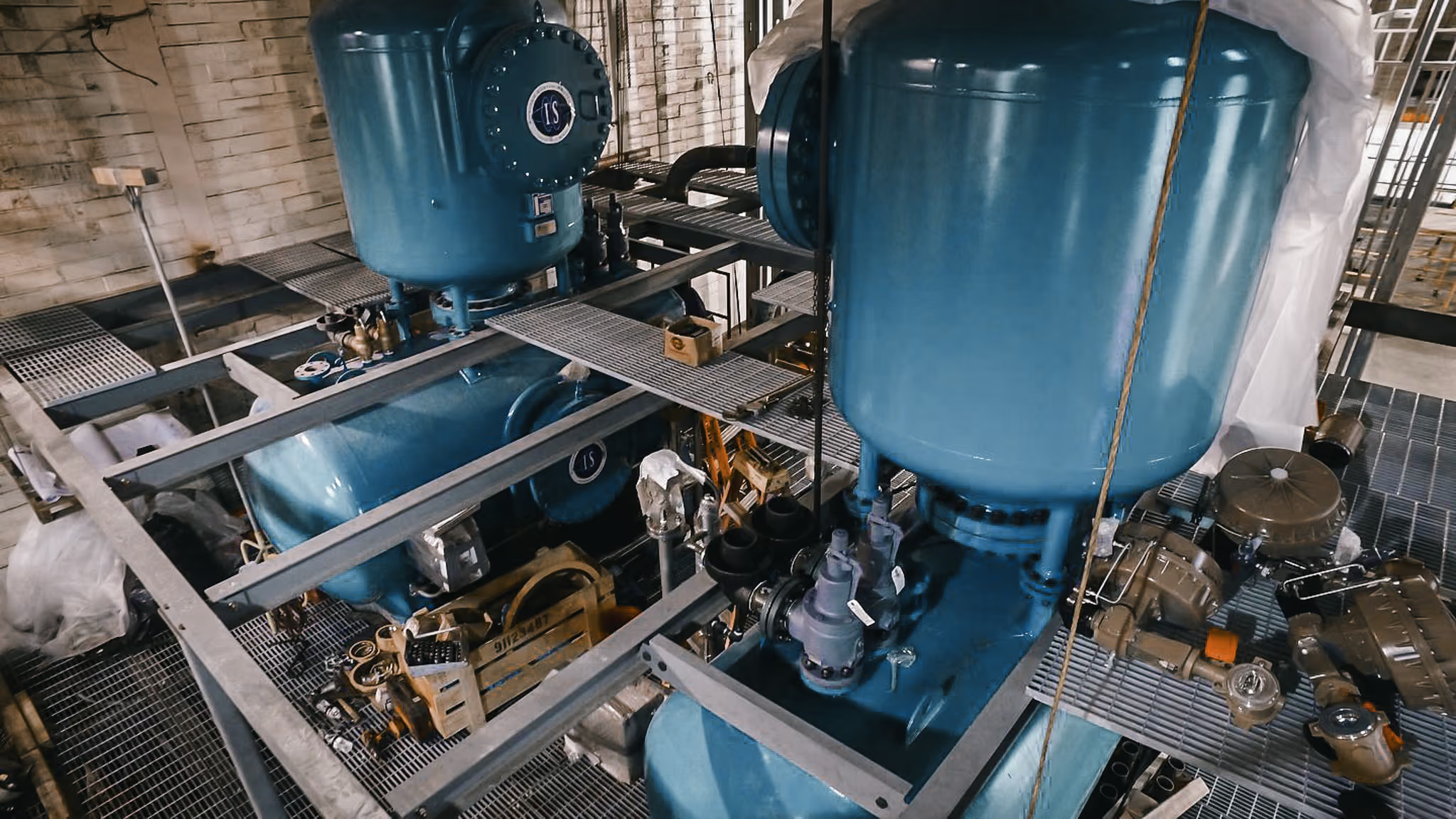
Deaerator and Blowdown Systems
Tri-Tech Sales is a commercial and industrial deaerator supplier serving facilities across the United States. We provide new deaerators, feedwater tanks, condensate return systems, and boiler room auxiliary equipment matched to your steam plant and quoted quickly. From capital replacements and plant upgrades to complete new boiler room packages, our team helps facilities protect their boilers and get the right equipment without the runaround.
With experience across healthcare, manufacturing, food processing, education, municipal facilities, and other demanding industries, we help you select the right deaerator for your steam system—not simply the one sitting on the shelf. Tri-Tech Sales partners with leading manufacturers to provide deaerator products and solutions.






DEAERATOR, BOILER FEED SYSTEMS, AND OTHER EQUIPMENT
Tri-Tech Sales represents Industrial Steam deaerators, feedwater systems and blowdown heat recovery equipment. We back every selection with factory engineering support, accurate lead times, and complete submittal packages.
Our equipment offerings include:
- Tray-type deaerators
- Spray-type deaerators
- Feedwater tanks
- Surge tanks
- Condensate return systems
- Boiler feed pumps
- Level controls
- Pressure-reducing stations
- Pump and control packages
- Boiler room auxiliary equipment
)
We also provide feedwater tanks, surge tanks, and condensate return systems designed to recover heat, reduce makeup water requirements, and maintain a dependable supply of feedwater during changing steam loads. On the blowdown side, we supply blowdown separators, blowdown tanks, and blowdown heat recovery systems that cool boiler blowdown to code-compliant discharge temperatures — and capture that heat to preheat makeup water instead of sending it down the drain. Each recommendation is sized according to the boiler plant’s capacity, condensate return rate, makeup water requirements, operating pressure, storage needs, water chemistry, and available boiler room space.
)
YOUR TRUSTED BOILER DEAERATOR SUPPLIER
Tri-Tech Sales works directly with facility managers, consulting engineers, mechanical contractors, and building owners to move deaerator projects from an initial budget estimate to a completed purchase order. Our team provides clear submittals, accurate lead-time information, and equipment properly sized for the steam plant it will support.
Whether you need a deaerator for a new boiler plant, a replacement for a corroded unit, or an upgrade from an atmospheric feedwater tank to a pressurized deaerator, Tri-Tech Sales provides responsive quotes and technical support based on your facility's operating requirements. Our deaerator offerings include tray-type and spray-type designs across a broad range of pressures and capacities, and we can provide complete packaged systems with storage tanks, feedwater pumps, controls, valves, and related accessories.
FAST, RESPONSIVE EQUIPMENT QUOTES
6 Locations: Council Bluffs, IA · Sioux City, IA · Lincoln, NE · Gibbon, NE · Rapid City, SD · Denver, CO
Phone: 800-874-9920
Email: support@tritechsales.com

TRAY-TYPE DEAERATORS OR SPRAY-TYPE DEAERATORS
Selecting the right deaerator involves more than finding available equipment. The system must be properly matched to the boiler plant and its operating conditions.
Spray-type deaerators atomize incoming water into a steam atmosphere to release dissolved gases. They are commonly used in smaller and mid-sized commercial or institutional boiler plants.
Tray-type deaerators distribute water across trays to create greater contact with scrubbing steam. They are often selected for larger plants, higher makeup water rates, process steam applications, and systems that require dependable oxygen removal across wide load swings.
An undersized or poorly matched deaerator may pass oxygen into the boiler, struggle to maintain feedwater temperature, or provide inadequate storage during demand changes. An oversized unit may add unnecessary capital cost and consume valuable boiler room space.
Our team evaluates the complete application to recommend deaeration equipment that supports corrosion protection, reliable feedwater supply, energy efficiency, and long-term serviceability.
)
WHY CHOOSE TRI-TECH SALES?
- More than 25 years of boiler room experience
- Equipment recommendations grounded in real installation and service knowledge
- Deaerators sized to the plant, condensate load, makeup water, and water chemistry
- Responsive budgetary and formal equipment quotes
- Submittal support, including cut sheets and dimensional drawings
- Specification and application review
- 20,000+ parts stocked in house
- Local support from six offices across Iowa, Nebraska, South Dakota, and Colorado
- Equipment options for commercial and industrial steam plants
)
SUPPORT BEYOND THE SALE
Our support continues beyond the purchase order. Tri-Tech Sales coordinates delivery schedules with installing contractors and provides detailed submittal packages to help keep deaerator projects moving smoothly. We can also connect your team with manufacturer resources for startup, commissioning, controls setup, and warranty support, ensuring proper operation from the start. This helps guarantee the deaerator, pumps, and controls are installed correctly and performing as intended from the beginning.
We prioritize responsive quotes, transparent lead times, and clear communication throughout the equipment-selection process. Whether you need a replacement deaerator, a complete feedwater system, boiler feed pumps, level controls, or condensate return equipment, Tri-Tech Sales can help you select equipment that improves energy efficiency and long-term reliability. Our deaerators help you prevent thermal shock and maintain proper feed water temperature. We supply units with spray valves or tray stacks that use low pressure heating steam and steam strips to remove remaining oxygen and vented gases effectively. Each deaerator features an inlet water connection, vent line, pressure gauge, and vent condenser or vacuum pump options to optimize deaeration and reduce operating costs. We ensure the delivery of deaerated water with appropriate oxygen levels.
)
FREQUENTLY ASKED QUESTIONS ABOUT DEAERATORS
What does a deaerator do?
A deaerator heats boiler feedwater and mechanically removes dissolved oxygen, free carbon dioxide, and other non-condensable gases before the water enters the boiler.Removing these corrosive gases helps prevent oxygen pitting and corrosion damage in boilers, economizers, boiler feed water piping, and condensate systems. Corrosion caused by dissolved gases can lead to leaks, equipment failure, and disintegration of metal components. Maintaining low oxygen content in the feedwater is crucial to extending boiler lifespan and minimizing maintenance needs.
A deaerator also preheats the feedwater to its saturation temperature using low pressure steam, which improves overall boiler room efficiency, reduces thermal shock, and minimizes heat loss. This preheating supports stable pressure control in steam generating boiler systems and enhances steam quality by removing dissolved gases. Typical deaerators operate at 5-7 psi pressure and 225-227 degrees Fahrenheit to optimize the solubility of gases and facilitate effective deaeration. The deaerated boiler feedwater, with traces of oxygen reduced to 7 ppb or less, is then supplied to the boiler to ensure reliable steam generation and protect the water system from corrosion.
Do I need a deaerator, or is a boiler feedwater tank enough?
It depends on the size and operating conditions of your steam plant. Smaller, low-pressure heating plants with high condensate return rates may operate with an atmospheric feedwater tank and proper chemical treatment.
Larger boiler plants, higher-pressure systems, process steam applications, and facilities with significant makeup water often benefit from a pressurized deaerator. Tri-Tech Sales can help evaluate the boiler capacity, condensate return, makeup water, and water chemistry to determine the right approach.
What is the difference between a tray-type and spray-type deaerator?
Both designs remove dissolved gases, but they use different methods.
Spray-type deaerators atomize incoming water through spray nozzles into a steam atmosphere inside a horizontal vessel, where low-pressure steam enters to strip dissolved gases. They are commonly used in smaller and mid-sized plants.
Tray-type deaerators distribute water over a tray stack in a vertical domed deaeration section mounted on a horizontal storage vessel. Low-pressure deaeration steam flows upward counter to the water flowing downward, providing greater contact and scrubbing of the water. This design is often used in larger plants or applications with high makeup water rates and changing loads, and is commonly built to Heat Exchange Institute (HEI) performance standards.
Can I replace an atmospheric feedwater tank with a deaerator?
In many cases, yes. Upgrading to a pressurized deaerator can improve dissolved-gas removal, stabilize feedwater temperature, reduce oxygen-scavenger chemical usage, and provide better protection for the boiler and feedwater system.
The new unit must be properly sized for the plant's steam load, condensate return, makeup water, storage requirements, and available boiler room space.
How does a deaerator remove dissolved gases from feedwater?
A deaerator removes dissolved gases like oxygen and carbon dioxide from boiler feedwater by using two key principles: gas solubility decreases as water temperature rises, and dissolved gases escape most effectively when water is dispersed thinly and scrubbed with steam. Boiler feedwater enters the deaerator through a feedwater spray nozzle or cascades over perforated trays, coming into direct contact with low-pressure steam rising from below. This steam heats the water to near its saturation temperature, at which point the water can no longer hold dissolved oxygen and carbon dioxide, causing these gases to be stripped out.
The steam heats the boiler feedwater, facilitating the removal of gases which then separate from the water. These gases are carried upward by the rising steam and exit through a vent valve at the top of the deaerator, often creating a small visible plume of steam. The deaerated, heated water then commonly falls into a horizontal cylindrical vessel where it is stored as hot water, ready to be pumped into the steam generating boiler system. Low pressure steam obtained from the plant is introduced via a sparger pipe to keep the stored boiler feedwater warm and maintain water quality.
How long does a deaerator last, and when should it be replaced?
A well-maintained deaerator typically lasts 20 to 30 years or more. Its lifespan depends heavily on water chemistry, operating practices, and how consistently the control system maintains proper pressure and temperature. Signs that replacement is needed include pitting of the vessel, damaged spray valves or trays, failing level controls, and rising dissolved oxygen levels.
If your boiler shows oxygen pitting or oxygen scavenger chemical usage increases, it often indicates deaerator issues. Many large industrial facilities rely on deaerators to remove oxygen and carbon dioxide to prevent corrosion, which can cause 10-15 g of iron loss per m3 of water and lead to disintegration of metal piping and equipment. Vacuum deaerators, which operate under low pressure, can reduce oxygen content to less than 7 ppb (0.007 mg/L), significantly lowering corrosion risk.
Including a deaerator as part of your steam generating systems ensures that boiler feedwater enters the boiler with minimal dissolved gases, improving steam quality, stabilizing boiler pressure, and extending boiler lifespan by preventing corrosion and thermal shock. Both the deaeration section and storage section work together to provide just enough steam to remove oxygen and other gases, ensuring efficient and reliable boiler operation.
Contact Us
Locations: Nebraska, Iowa, South Dakota, Colorado.
24/7 Phone: 800-874-9920
Email: support@tritechsales.com
Office Hours: Monday – Friday: 7:00am – 4:00pm