Your Trusted Equipment Provider
South Dakota Deaerator
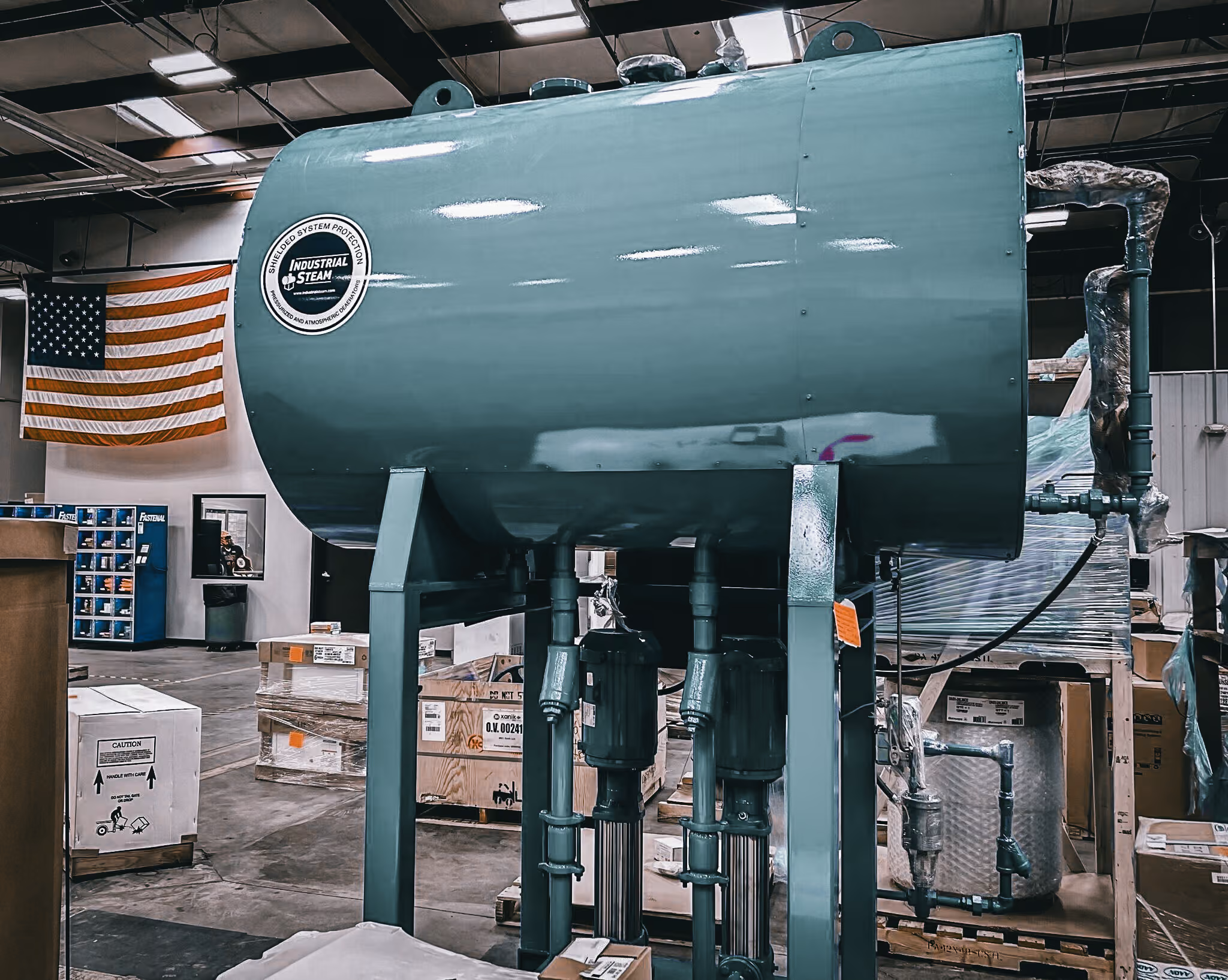
Tri-Tech Sales is a commercial and industrial deaerator supplier serving facilities across South Dakota. We provide new deaerators, feedwater tanks, condensate return systems, and boiler room auxiliary equipment matched to your steam plant and quoted quickly. From capital replacements and plant upgrades to complete new boiler room packages, our team helps South Dakota facilities protect their boilers and get the right equipment without the runaround.
With experience across healthcare, manufacturing, food processing, education, municipal facilities, and other demanding industries, we help you select the right deaerator for your steam system. Tri-Tech Sales partners with leading manufacturers to provide deaerator products and solutions suited to South Dakota facilities.
Whether your plant requires a tray-type deaerator for a high-pressure process load, a spray-type unit for a smaller heating plant, or a complete feedwater system with pumps and controls, we provide dependable equipment recommendations and honest pricing.
South Dakota Deaerator Sales and Equipment We Supply
As a dedicated boiler room equipment supplier, Tri-Tech Sales offers a broad range of deaeration and feedwater products for commercial and industrial steam plants throughout South Dakota.
Our equipment offerings include:
- Tray-type deaerators
- Spray-type deaerators
- Feedwater tanks
- Surge tanks
- Condensate return systems
- Boiler feed pumps
- Level controls
- Pressure-reducing stations
- Pump and control packages
- Boiler room auxiliary equipment
)
Proper deaeration removes dissolved oxygen and carbon dioxide from boiler feedwater. These corrosive gases can cause oxygen pitting and damage boilers, economizers, feedwater piping, and condensate systems from the inside out. A properly sized deaerator can help extend boiler life, reduce oxygen-scavenger chemical usage, stabilize feedwater temperature, and recover heat from returned condensate. We also provide feedwater tanks, surge tanks, and condensate return systems designed to recover heat, reduce makeup water requirements, and maintain a dependable supply of feedwater during changing steam loads. Each recommendation is sized according to the boiler plant’s capacity, condensate return rate, makeup water requirements, operating pressure, storage needs, water chemistry, and available boiler room space.
)
Local South Dakota Team
Phone: 605-423-7010
24/7 Support: 800-874-9920
Email: blackhills@tritechsales.com
Office Locations: Sturgis and Sioux City
Office Hours: 7:00am - 4:00pm
Brands we represent





Your Trusted South Dakota Deaerator Supplier
Tri-Tech Sales supplies deaerators and feedwater equipment throughout Sioux Falls, Rapid City, Aberdeen, Watertown, Brookings, Mitchell, Pierre, Yankton, Sturgis, and surrounding South Dakota communities. We work directly with facility managers, consulting engineers, mechanical contractors, and building owners to move deaerator projects from an initial budget estimate to a completed purchase order. Our team provides clear submittals, accurate lead-time information, and equipment properly sized for the steam plant it will support. Whether you need a deaerator for a new boiler plant, a replacement for a corroded unit, or an upgrade from an atmospheric feedwater tank to a pressurized deaerator, Tri-Tech Sales provides responsive quotes and technical support based on your facility’s operating requirements. Our deaerator offerings include tray-type and spray-type designs across a broad range of pressures and capacities. We can also provide complete packaged systems with storage tanks, feedwater pumps, controls, valves, and related accessories.
)
Tray-Type Deaerators or Spray-Type Deaerators
Selecting the right deaerator involves more than finding available equipment. The system must be properly matched to the boiler plant and its operating conditions.
Important sizing and selection factors include:
- Total boiler feedwater demand
- Condensate return rate
- Condensate return temperature
- Makeup water volume
- Makeup water temperature
- Operating pressure
- Required storage capacity
- Plant load swings
- Water chemistry
- Boiler feed pump requirements
- Available floor space and height
- Control and redundancy requirements
Spray-type deaerators atomize incoming water into a steam atmosphere to release dissolved gases. They are commonly used in smaller and mid-sized commercial or institutional boiler plants.
Tray-type deaerators distribute water across trays to create greater contact with scrubbing steam. They are often selected for larger plants, higher makeup water rates, process steam applications, and systems that require dependable oxygen removal across wide load swings.
An undersized or poorly matched deaerator may pass oxygen into the boiler, struggle to maintain feedwater temperature, or provide inadequate storage during demand changes. An oversized unit may add unnecessary capital cost and consume valuable boiler room space.
Our team evaluates the complete application to recommend deaeration equipment that supports corrosion protection, reliable feedwater supply, energy efficiency, and long-term serviceability.
Why Choose Tri-Tech Sales?
- Midwest boiler room experts since 1999
- Equipment recommendations grounded in real installation and service knowledge
- Deaerators sized to the plant, condensate load, makeup water, and water chemistry
- Responsive budgetary and formal equipment quotes
- Submittal support, including cut sheets and dimensional drawings
- Specification and application review
- Local support from our South Dakota team
- Equipment options for commercial and industrial steam plants
)
Support Beyond the Sale
Our support continues beyond the purchase order. Tri-Tech Sales coordinates delivery schedules with installing contractors and provides detailed submittal packages to help keep South Dakota deaerator projects moving smoothly. We can also connect your team with manufacturer resources for startup, commissioning, controls setup, and warranty support, ensuring proper operation from the start. This helps guarantee the deaerator, pumps, and controls are installed correctly and performing as intended from the beginning. Because heating and process reliability are especially important during South Dakota winters, we prioritize responsive quotes, transparent lead times, and clear communication throughout the equipment-selection process. Whether you need a replacement deaerator, a complete feedwater system, boiler feed pumps, level controls, or condensate return equipment, Tri-Tech Sales can help you select equipment that improves boiler protection, energy efficiency, and long-term reliability. Our deaerators include pressure vessels designed to prevent thermal shock and maintain proper feed water temperature. We supply units with spray valves or tray stacks that use low pressure heating steam and steam strips to remove remaining oxygen and vented gases effectively. Each deaerator features an inlet water connection, vent line, pressure gauge, and vent condenser or vacuum pump options to optimize deaeration and reduce operating costs. We ensure the delivery of deaerated water with oxygen levels below 7 ppb, providing oxygen free steam and saturated steam for your boiler feed water system. Our typical spray type deaerators and tray-type deaerators both facilitate steam rising through the water vapor to strip undissolved oxygen and carbon dioxide, minimizing water hammer and corrosion in your power plants and industrial facilities across South Dakota.
)
Frequently Asked Questions About South Dakota Deaerators
What does a deaerator do?
A deaerator heats boiler feedwater and mechanically removes dissolved oxygen, free carbon dioxide, and other non condensable gases before the water enters the steam generating boiler system.
Removing these corrosive gases helps prevent oxygen pitting and corrosion damage in boilers, economizers, feedwater piping, and condensate systems. A deaerator also preheats the feedwater to saturation temperature, which can improve overall boiler room efficiency and reduce thermal shock.
Do I need a deaerator, or is a feedwater tank enough?
It depends on the size and operating conditions of your steam plant. Smaller, low-pressure heating plants with high condensate return rates may operate with an atmospheric feedwater tank and proper chemical treatment.
Larger boiler plants, higher-pressure systems, process steam applications, and facilities with significant fresh make up water often benefit from a pressurized deaerator. Tri-Tech Sales can help evaluate the boiler capacity, condensate return, makeup water, and water chemistry to determine the right approach.
What is the difference between a tray-type and spray-type deaerator?
Both designs remove dissolved gases, but they use different methods.
Spray-type deaerators atomize incoming water through spray nozzles into a steam atmosphere inside a horizontal vessel, where low pressure steam enters to strip dissolved gases. They are commonly used in smaller and mid-sized plants.
Tray-type deaerators distribute water over a tray stack in a vertical domed deaeration section mounted on a horizontal storage vessel. Low pressure deaeration steam flows upward counter to the water flowing downward, providing greater contact and scrubbing of the water. This design is often used in larger plants or applications with high makeup water rates and changing loads and meets Heat Exchange Institute (HEI) standards.
How is a deaerator sized?
Deaerator sizing begins with the boiler plant’s total feedwater demand and considers condensate return rate and temperature, makeup water volume and temperature, operating pressure, storage capacity, and boiler feedwater pumps requirements.
Providing your boiler capacities, operating pressure, condensate information, and makeup water details allows Tri-Tech Sales to recommend properly sized options that improve boiler room efficiency and prevent corrosion damage.
How much does a commercial deaerator cost in South Dakota?
The cost depends on the unit’s capacity, design, operating pressure, storage volume, pump package, controls, materials such as stainless steel, and required accessories like vent valves and safety relief valves.
A small packaged spray-type deaerator will have a different cost than a large tray-type system with duplex boiler feedwater pumps and advanced controls. The best way to receive accurate pricing is to provide your boiler plant information and project requirements.
Can I replace an atmospheric feedwater tank with a deaerator?
In many cases, yes. Upgrading to a pressurized deaerator can improve dissolved-gas removal, stabilize feedwater temperature, reduce oxygen scavenger chemical usage, and provide better protection for the boiler and feedwater system.
The new unit must be properly sized for the plant’s steam load, condensate return, fresh make up water, storage requirements, and available boiler room space.
How long does it take to get a new deaerator?
Lead times vary based on the manufacturer, deaerator type, capacity, tank size, pump package, controls, and current equipment availability.
Sharing your project schedule early allows Tri-Tech Sales to identify equipment that meets both your technical requirements and desired delivery timeline. Planning ahead is especially important for large tray-type deaerators and customized packaged feedwater systems.
Contact Us
Phone: 605-423-7010
24/7 Support: 800-874-9920
Email: blackhills@tritechsales.com
Office Locations: Sturgis and Sioux City
Office Hours: 7:00am - 4:00pm